
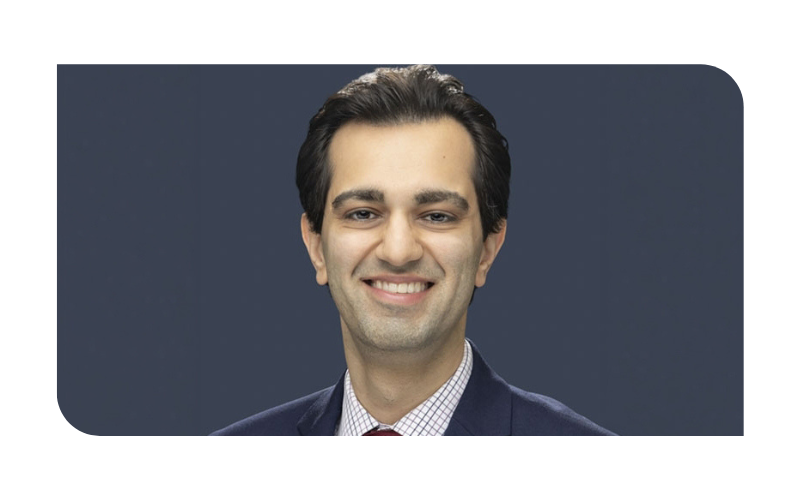
Jayson Marwaha, MD, Clinical Instructor of Surgery, University of Michigan
How did you hear about Atropos Health?
Through peer-reviewed literature describing the product and conversations with colleagues at national conferences about its value.
What is your primary area of interest?
Clinically, I focus on robotic surgery, abdominal wall reconstruction, and foregut and bariatric surgery. Academically, my interests are in surgical AI and human–computer interaction.
What question(s) did you ask Atropos Health?
I tend to ask questions about outcomes for patients similar to the ones I’m operating on, such as postoperative outcomes, hernia recurrence, and weight loss. These insights allow me to make more informed recommendations and have educated discussions with patients about their options.
How did you utilize the insights provided by Atropos Health?
I use the findings to ground my patient conversations in real-world data and give more personalized, evidence-based recommendations.
In your own words, please describe Atropos Health.
What comes after synthesizing the existing literature? What’s the next step in using AI for flexible, personalized evidence at the point of care? It is, of course, to generate your own evidence at the point of care. Atropos Health is the tool I think comes closest to that vision. It turns your day-to-day clinical questions into observational studies so you can analyze real-world data in real time. This tool offers a window into what the next evolution of point-of-care clinical decision support will look like—tools that allow you to not only engage with the literature, but effectively engage with the data itself, to get even closer to the answer you’re looking for.